
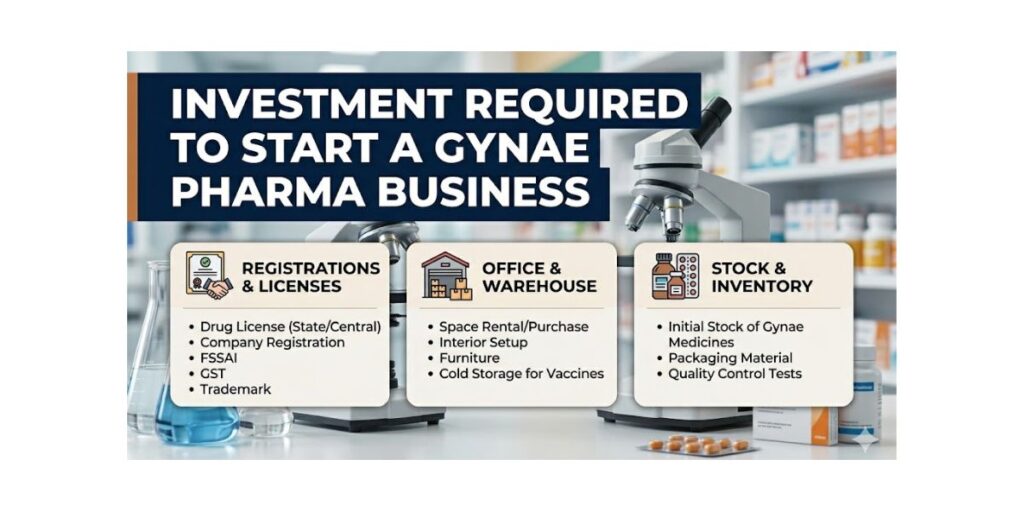
Establishing a gynaecology pharma business can be a great profitable venture if strategized accordingly. The demand for women’s healthcare products in India is constantly growing because of increasing awareness, better diagnosis and greater concerns related to fertility and PCOS followed by pregnancy care and nutritional deficiencies.
However, there is one question that every entrepreneur asks is: How much investment is really needed to begin a gynae pharma business?
The answer lie on a lot of factors. It depends on the business model and scale of operations along with product range and marketing strategy. Let’s get to know about it clearly and practically.
Key Statistics Related to Gynaecology Pharma Business in India
- According to Fortune Business Insights, India women’s health therapeutics market (broad bucket covering multiple women’s health therapies) is projected to grow from ~$2.22B (2022) to ~$5.98B (2029) at ~15.2% CAGR.
- Reports from Grand View Research state that India contraceptive market is estimated around ~$1.69B (2024) and projected to reach ~$2.43B (2030) (about 6.2% CAGR).
- A large meta-analysis reports ~10% pooled prevalence of PCOS in India, says PMC.
Understanding the Gynae Pharma Business Model
Before calculating investment, you must decide your business model. This decision directly impacts capital requirements.
1. Manufacturing Unit Model
In this model, you set up your own production facility. This gives you complete control over quality, branding, and profit margins. However, it requires significant investment in land, machinery, compliance, and staff.
This model is suitable for entrepreneurs with strong financial backing and long-term expansion goals.
2. Third-Party Manufacturing Model
Here, you outsource manufacturing to an established pharma manufacturer while selling products under your own brand name. This drastically reduces infrastructure investment.
This is the most preferred model for new entrants because it balances risk and profitability.
3. Marketing & Distribution Model
In this setup, you focus purely on marketing and distributing gynae products to doctors and pharmacies. You purchase products from manufacturers and earn margins through sales.
This model requires the least capital but demands strong sales and doctor networking skills.

Legal & Registration Investment
No pharma business can operate without proper licenses and registrations. The basic legal costs include:
- Company registration (Proprietorship, LLP, or Private Limited)
- Drug License (Retail or Wholesale)
- GST registration
- Trademark registration for brand protection
In India, the estimated cost for registration and licensing can range between ₹50,000 to ₹2,00,000 depending on state and business structure.
Do not cut corners here. Compliance mistakes can shut your business down before it grows.
Product Portfolio Investment
Your product range determines working capital requirements.
Common gynae products include:
- Iron & Folic Acid tablets
- Calcium supplements
- Protein powders for pregnancy
- PCOS management medicines
- Fertility support tablets
- Hormonal balance capsules
- Multivitamin syrups
Each product may require ₹50,000 to ₹2 lakhs (approx..) initial inventory investment depending on MOQ.
Starting with 8–15 fast-moving products is a practical strategy to manage risk.
Marketing & Promotion Investment
Pharma is not just about products, it’s about prescriptions.
Major marketing expenses include:
- Medical Representative (MR) salaries
- Doctor samples
- Visual aids and promotional materials
- Doctor meeting expenses
- CME programs
Digital marketing (website, SEO, social media branding)
Monthly marketing expenses can range from ₹1–3 lakhs (approx.) for small teams. Strong marketing is what separates stagnant companies from fast-growing ones.
Do not underestimate this cost.
Inventory & Working Capital Requirement
Working capital is crucial in pharma because:
- Distributors often demand credit
- Doctors expect consistent supply
- Stockouts damage brand reputation
You should ideally maintain 3–6 months of working capital to ensure smooth operations.
For a small-scale brand owner model, working capital of ₹3–10 lakhs (approx.) is advisable initially.
Total Estimated Investment Breakdown
Here’s a simplified estimate:
| Marketing & Distribution Model: | ₹5–15 lakhs (small scale launch) |
| Third-Party Brand Owner Model: | ₹8–25 lakhs (moderate portfolio launch) |
| Manufacturing Unit Model: | ₹50 lakhs to ₹2 crore+ (large capital investment) |
Your business goals determine which path you choose.
Profit Margin & ROI Potential
The gynae segment offers strong profit potential because:
- Women’s healthcare products have steady demand
- Many prescriptions are repeat-based
- Chronic conditions like PCOS and hormonal imbalance require long-term treatment
Average margins range from 20% to 40%, depending on product type and distribution structure. Breakeven period is typically 12–24 months, provided marketing execution is strong.
Risk Factors to Consider
Every business carries risk. In gynae pharma, key risks include:
- Regulatory compliance issues
- Delayed payments from distributors
- Intense competition
- Product approval delays
- Poor marketing execution
Success depends more on strategy than capital alone.
How to Minimize Investment & Maximize Returns?
If you’re starting fresh, here’s practical advice:
- Begin with third-party manufacturing
- Focus on 8–12 high-demand products
- Target specialist gynaecologists
- Control marketing expenses initially
- Partner with a reliable manufacturer
- Build long-term doctor relationships
Avoid overspending on inventory in the first year. Scale gradually.
Final Thoughts
Starting a gynae pharma business requires thoughtful financial planning. While the investment can start as low as ₹5–8 lakhs for a small marketing setup, scaling into a strong branded pharma company may require ₹20 lakhs or more.
The real success factor is not just money, it’s smart product selection, regulatory compliance, and strong doctor relationships.
If you plan carefully, control costs, and execute consistently, the gynae pharma segment offers stable growth and attractive returns in the long term.
Frequently Asked Questions
1. What is the minimum investment required to start a gynae pharma business?
The minimum investment can start from ₹5–8 lakhs if you operate through a marketing or distribution model. This covers licensing, initial stock, and basic marketing expenses. However, scaling the business will require additional working capital. The exact amount depends on your product range and territory coverage.
2. How much investment is needed for third-party manufacturing?
For launching 10–15 gynae products through third-party manufacturing, you may require ₹8–25 lakhs. This includes product development, minimum order quantities, packaging, branding, and initial marketing. It is a cost-effective option compared to setting up your own factory. Many new entrepreneurs prefer this model for lower risk.
3. How much does it cost to start a manufacturing unit?
Setting up a small-scale manufacturing unit can require ₹50 lakhs to ₹2 crore or more. The investment covers land, machinery, laboratory setup, compliance approvals, staff salaries, and utilities. Manufacturing offers higher margins but involves higher operational risk. It is suitable for long-term, large-scale expansion plans.
4. Is a drug license mandatory to start a gynae pharma business?
Yes, a valid drug license issued by the State Drug Control Authority is mandatory. Without it, you cannot legally sell or distribute pharmaceutical products. GST registration is also required for billing and taxation purposes. Compliance should always be your first priority.
5. How many products should I start with initially?
Starting with 8–15 high-demand gynae products is considered practical. This helps manage inventory investment while covering common prescription categories. Expanding gradually after market acceptance reduces financial risk. Focus on quality and consistent supply rather than launching too many products at once.