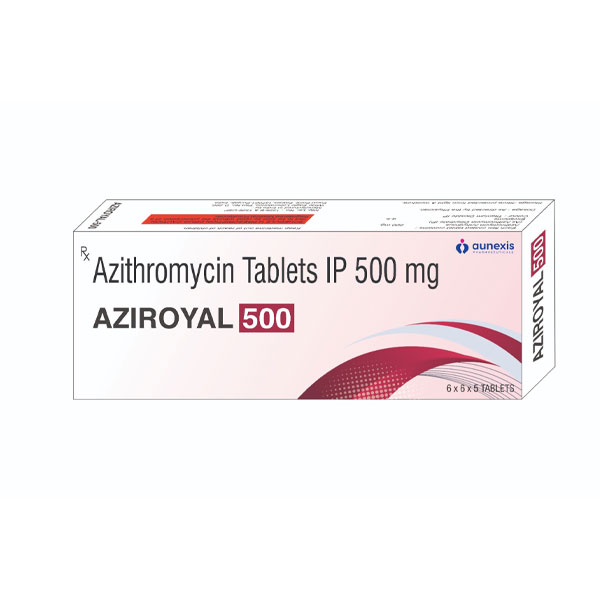
Aziroyal 500 Tablet is a highly effective antibiotic formulation containing Azithromycin 500 mg, widely used for the treatment of a broad range of bacterial infections. Belonging to the macrolide class of antibiotics, this medication works by inhibiting bacterial protein synthesis, thereby preventing the growth and multiplication of harmful bacteria in the body.
Manufactured with advanced pharmaceutical standards, Aziroyal 500 is trusted by healthcare professionals for its efficacy, convenient dosing, and strong safety profile when used as prescribed.
Composition
- Azithromycin 500 mg
Azithromycin is a broad-spectrum antibiotic known for its long half-life and excellent tissue penetration, making it effective even with shorter treatment durations.
Mechanism of Action
Aziroyal 500 works by binding to the 50S ribosomal subunit of bacteria, inhibiting protein synthesis that is essential for bacterial survival. This action stops the growth of bacteria and helps the immune system eliminate the infection effectively.
Indications & Uses
Aziroyal 500 Tablet is prescribed for the treatment of various bacterial infections, including:
- Respiratory tract infections such as bronchitis and pneumonia
- Ear, nose, and throat (ENT) infections like sinusitis and tonsillitis
- Skin and soft tissue infections
- Sexually transmitted infections (STIs) such as uncomplicated infections
- Typhoid fever and other bacterial infections
It is important to note that Aziroyal 500 is effective only against bacterial infections and does not treat viral conditions like the common cold or flu.
Dosage & Administration
Aziroyal 500 should be taken exactly as prescribed by a healthcare professional. It is usually administered once daily, with or without food. For best results:
- Take the medicine at the same time each day
- Complete the full course of treatment
- Do not skip doses or stop early, even if symptoms improve
Incomplete treatment may lead to recurrence or antibiotic resistance.
Benefits of Aziroyal 500
- Broad-spectrum antibiotic coverage
- Shorter treatment duration compared to many antibiotics
- High patient compliance due to once-daily dosing
- Effective against multiple infection types
- Rapid symptom relief
Possible Side Effects
Like all medications, Aziroyal 500 may cause some side effects, although not everyone experiences them. Common side effects include:
- Nausea
- Vomiting
- Diarrhea
- Abdominal pain
These are usually mild and temporary. However, if symptoms persist or worsen, medical advice should be sought promptly.
Precautions & Warnings
- Use only under medical supervision
- Inform your doctor about any history of liver disease or heart conditions
- Avoid use in case of known allergy to macrolide antibiotics
- Pregnant and breastfeeding women should consult a doctor before use
Storage Instructions
- Store in a cool, dry place below 25–30°C
- Keep away from direct sunlight and moisture
- Keep out of reach of children
Frequently Asked Questions
How does Azithromycin 500 mg work?
Azithromycin works by inhibiting bacterial protein synthesis, which stops the growth and multiplication of bacteria, allowing the body’s immune system to eliminate the infection.
How should I take Aziroyal 500 Tablet?
Aziroyal 500 should be taken exactly as prescribed by your doctor, usually once daily. It can be taken with or without food, but it is best to take it at the same time each day for consistent results.
Can I stop taking Aziroyal 500 if I feel better?
No, you should complete the full prescribed course even if you feel better. Stopping early may lead to incomplete treatment and antibiotic resistance.
What are the common side effects of Aziroyal 500?
Common side effects include nausea, vomiting, diarrhea, abdominal pain, and mild stomach discomfort. These are usually temporary and subside on their own.
Is Aziroyal 500 effective for viral infections?
No, Aziroyal 500 is only effective against bacterial infections and does not work for viral infections like the common cold or flu.
Can I take Aziroyal 500 with other medications?
You should inform your doctor about any other medications you are taking, as Azithromycin may interact with certain drugs, including antacids and heart-related medications.